PAGE CONTENTS
Objectives
The key objective of the activity was to demonstrate wavelength division multiplexing (WDM) around 1064 nm wavelength in order to increase the data rate of the current generation of laser communication terminals.
This was realized by defining a suitable laser system configuration, definition of requirements of all elements, design and realization of a Proof-of-Concept Demonstrator (POCD) capable of testing and verifying key requirements including e.g. a data rate of 1.8 Gbps per channel.
Challenges
The currently used NPRO laser technology represents a major obstacle for an implementation of WDM. NPRO lasers feature only limited tunability that restricts the usable wavelength range for WDM. Diode lasers can overcome this limitation. However, typically they introduce increased amounts of frequency noise into the system. Thus, low-noise control electronics need to be developed. In addition, a suitable phase-lock loop is required.
System Architecture
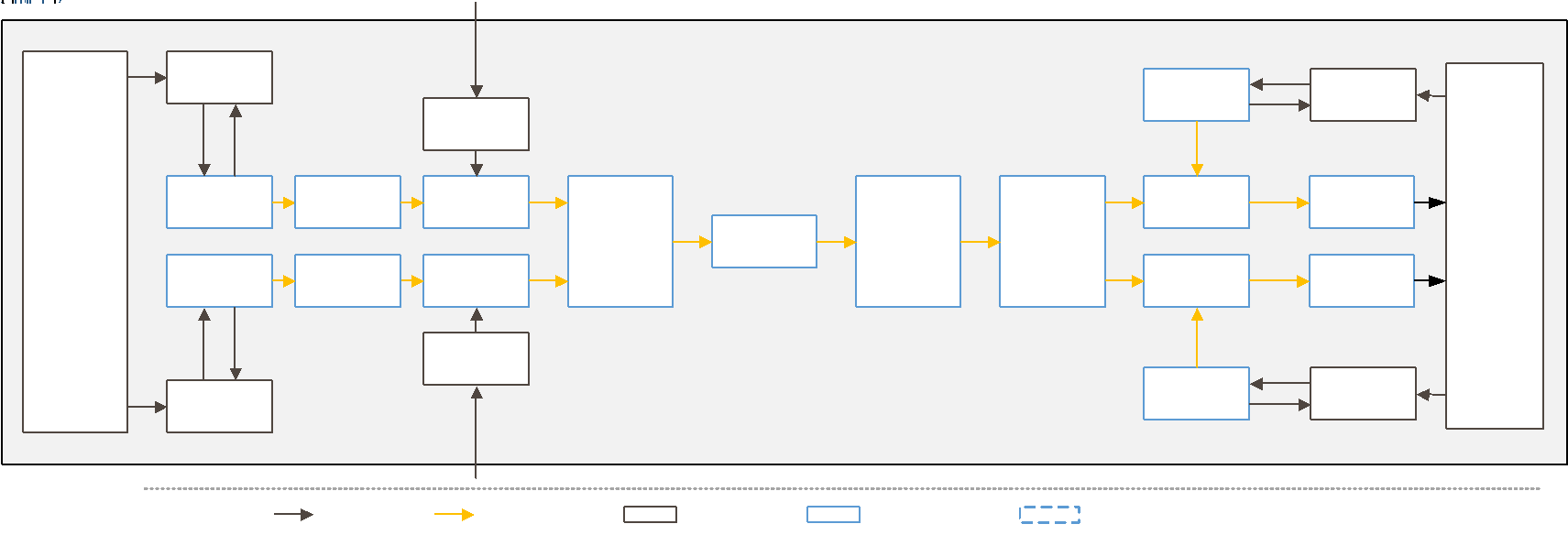
The POCD features two wavelength channels for coherent data transmission. On the sending side, each channel consists of the following components:
-
TX laser module and laser driver
-
Optical phase modulator (EOM)
-
Fiber optics for optical signal handling
The two channels are multiplexed using a fibre tap coupler and fed into a fibre power amplifier. The amplifier’s output of ~2 W is attenuated with the fibre attenuator that simulates the free space loss from a GEO to a LEO satellite of -72 dB. On the receiving side a tap coupler serves as de-multiplexer.
For each wavelength channel the following components form the receiver system:
-
Fiber optics for optical signal handling
-
LO laser module and laser driver
-
Balanced photo receiver
-
Dither type OPLL
In each channel, the LO laser is phase-locked to the received light. The RX control electronics then extracts the data signal.
Plan
The first phase of the project was used to define a laser system configuration suitable for a WDM implementation, the corresponding milestone was the technical requirements specification.
In the next phase the POCD, including the OPLL architecture, was designed, resulting in the detailed design description of the OPLL.
The third phase of the project was used to build the laser modules and control electronics, OPLL electronics. In addition, commercial parts were procured in order to fully set up the POCD.
In the final phase of the project the POCD was tested against the requirements.
Current Status
The POCD is fully set up and the majority of performance tests were successfully completed. However, the verification of the data transmission failed due to non-optimal signal transmissions in the high-frequency (HF) chain and the resulting inability to acquire stable phase locking of the lasers. The failure analysis that was performed indicates the need for significant rework of the HF chain on the receiving side of the POCD. The activity is finished.