PAGE CONTENTS
Objectives
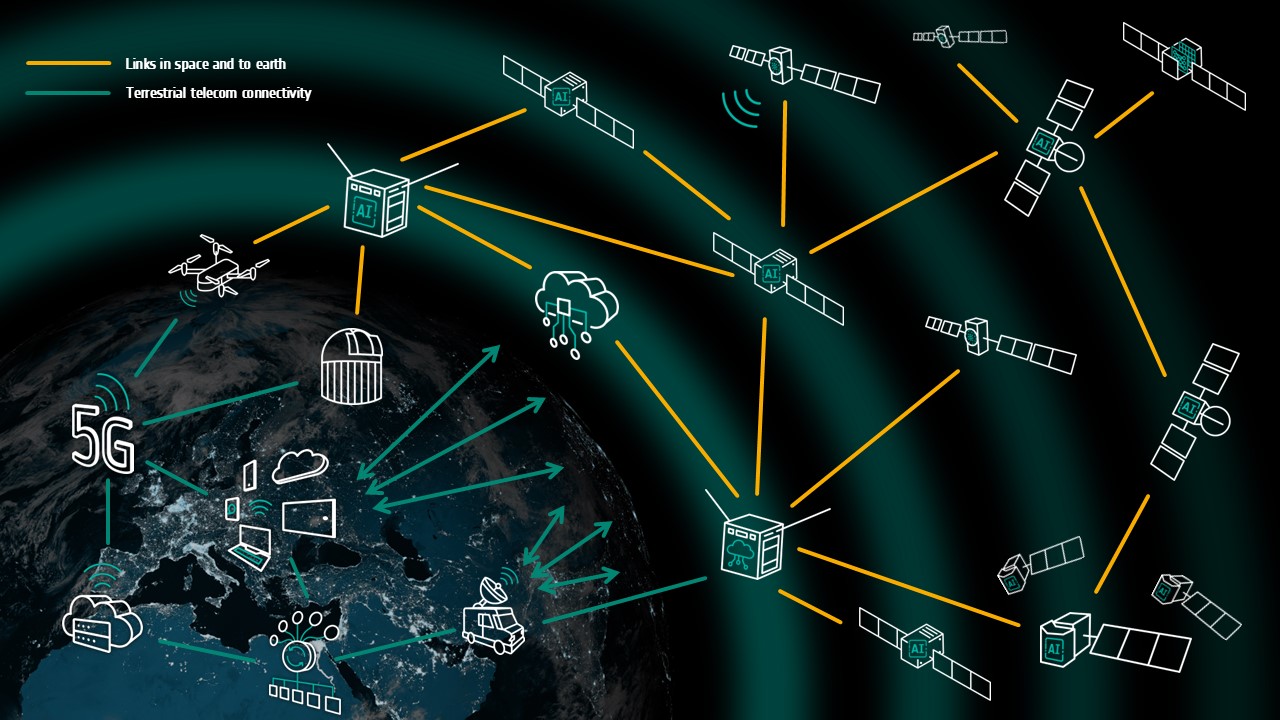
The R3 study identifies and assesses, in collaboration with users and stakeholders, new Rapid and Resilient Crisis Response applications and solutions which may benefit most from an increased use of secure SATCOM solutions and in particular of a Next Generation SATCOM infrastructure. In R3 study, the target is to design a Federated System for R3 to the crisis events containing two Pillars:
-
Information Pillar: capabilities to collect and process data gathered from TELECOM and other space-based or non -space-based domain systems (e.g., EO, NAV, Terrestrial networks);
-
Network Pillar: networks (e.g., IoT) to orchestrate, exchange and integrate the data as needed and the target use cases and end users in crisis event.
The ultimate goal is to specify and design a solution addressing the identified unmet requirements, including a preliminary architecture, preliminary cost estimation and development roadmap for two different timelines:
-
A Short-Term Deployment (STD) where exploiting a solution based on SATCOM infrastructure and other space-based and non space-based technologies to design the R3;
-
A Long-Term Deployment (LTD) where, to design the R3, going beyond the current available SATCOM infrastructure and other technologies used in STD phase and scale up deployed network in STD via new emerging technologies in SATCOM and other technologies.
Challenges
We witness every day how climate change results in a rapid increase in the number and intensity of natural disasters, resulting in loss of life and goods, such as the summer 2021 floods in Germany and Belgium (economic impact estimated €30 billion) and fires in Greece. R3 study aims to respond to leading global risks as identified in the World Economic Forum Global Risks Report 2021, e.g., related to climate action failure and extreme weather. It is key to identify and assess the most prominent crises management services and define solutions (e.g. federated system-of-systems) and technologies for delivering effective and efficient response to future crisis.
System Architecture
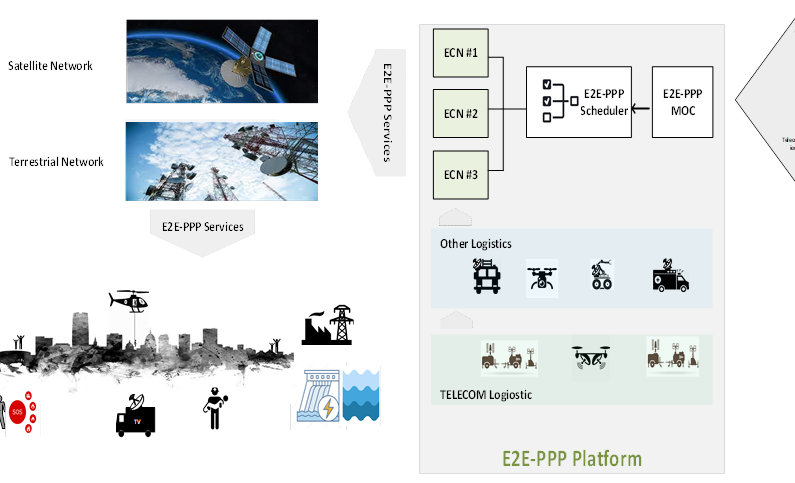
The E2E-PPP architecture contains following units:
-
E2E-PPP ECN, distributed edge data cloud platform as ECN.
-
E2E-PPP Mission Operation Centre (MOC), it operates ECN which are geographically distributed in different premises
-
E2E-PPP Scheduler, this unit selects which ECN(s) shall operate the crisis event
-
E2E-PPP Deployable Logistics, this shows which logistics are available to manage a crisis event in a respective area. It contains two main parts:
-
TELECOM deployable logistics, it provides the facilities that be implemented in the area that crisis event happens and provide TELECOM services, e.g. deployable satellite gateway
-
Other logistics, it provides a map of logistics that can manage corresponding crisis event, e.g., information of shelters for refugees, involved rescue team’s location with crisis event, etc
-
The E2E-PPP development approach adopts the following logic:
-
Studying E2E-PPP network orchestration requirement and services requirement definition
-
Developing and implementing E2E-PPP network orchestration
-
Performing a financial analysis and drawing a business model of the deployed E2E-PPP
-
Defining a roadmap for scaling up the deployed E2E-PPP platform in the future
Establishing Operational demonstrations containing satellite and terrestrial networks to validate the application of E2E-PPP to support R3 applications
Plan
Concretely, technology development of R3 contains the following steps:
-
Step 1: defining 5 crisis events use cases, including technological and technical requirements.
-
Step 2: Proposing the technical methodology which supports the technical requirements of uses cases defined in Step 1 for both STD and LTD.
-
Step 3: Proposing a business and financial methodology for both STD and LTD for the deployed technical methodology in Step 2:
-
To analyse the financial impact of the crisis over all crisis management cycle depicted in Figure 2.
-
To assess the impact of using technical methodology proposed in Step 2 on the crisis management over all crisis management cycle.
-
In both LTD and STD two main approaches are:
-
Technical Assessment and development, referring to technology requirement definition and eventually developing defined network components and orchestrations.
-
Business assessment and development, referring to market and financial gap analysis as well as costs for developing the network orchestration defined in technical step.
Current Status
Completed.
Companies