PAGE CONTENTS
Objectives
QUIC is a new encrypted-by-default Internet transport protocol that accelerates HTTP traffic and which has the intention to eventually replace TCP. Originally proposed by Google, the IETF is now actively pursuing work to define and standardize a series of RFCs for the first IETF QUIC transport protocol.
Since QUIC transport fully encrypts all transport protocol headers and authenticates the endpoints of a connection, currently widely deployed Performance Enhancement Proxies (PEP) can no longer be used to improve TCP performance.
The real interactions of QUIC using a satellite service have not been fully explored yet. The project objectives are to identify the root causes of any shortfalls in performance of specific QUIC mechanisms, propose changes to the specification, and evaluate the new proposals using a real-time emulation test bed used already for the MTAILS project [LINK MTAILS PROJECT]. The results of this work are contributed as code patches, presentations and direct contributions to the IETF, primarily targeting the QUIC Working Group.
Initially, focus is on QUICv1, where there is still an opportunity to influence standardisation work. After its standardisation, work shall focus on satellite-specific enhancement to be included in QUICv2.
Challenges
Influencing the QUIC standardization process requires a good knowledge of the IETF structure and the standardization processes. Additionally, experience has shown that it is convenient to attend regular IETF standards meetings, as this advances the impact with industry and provides opportunities to receive feedback on research. This is especially important considering that the satellite industry represents only a minor stakeholder within the much larger Internet community participating in the QUIC standardization process, represented by Google, Apple, Microsoft and the like.
System Architecture
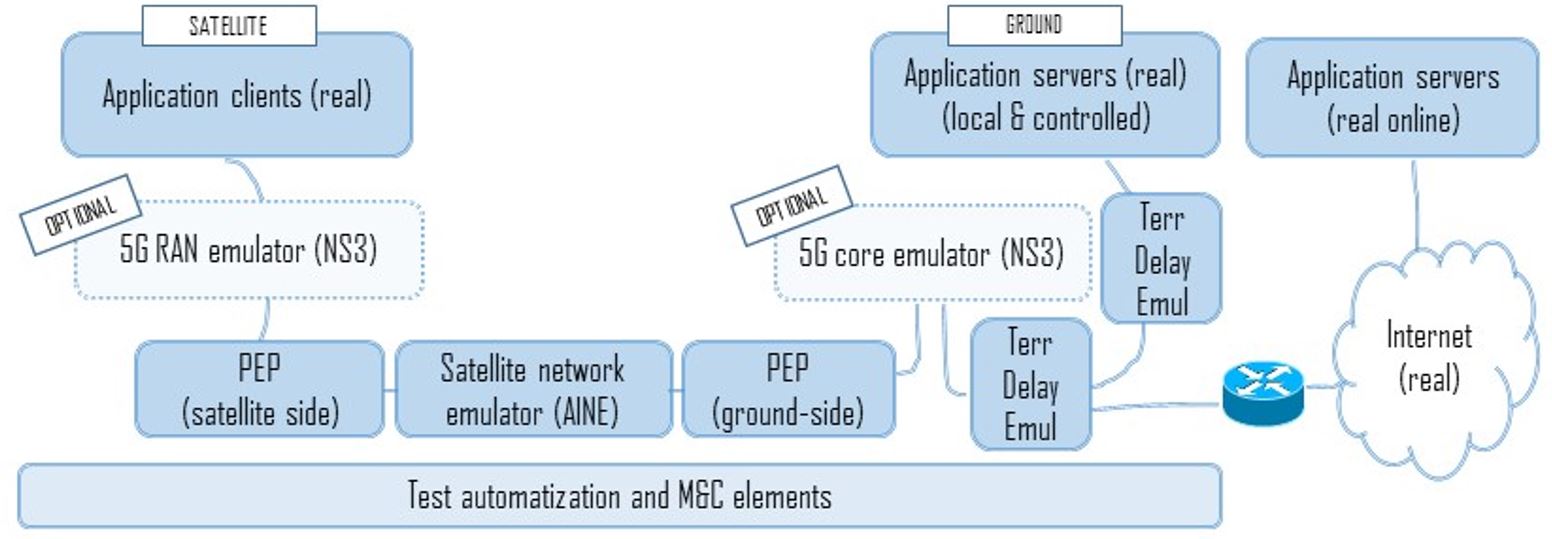
In order to evaluate QUIC performance and assess improvements in a realistic environment, the project extension re-uses the test bed developed in the MTAILS project.
This test bed features two emulators: a satellite emulator (based on AINE tool [Link AINE BROCHURE], implementing bandwidth on demand (BoD) assignment protocols and applying satellite delays) and an optional 5G backhaul emulator. Connected to the emulators, we have commercial Performance Enhancement Proxies appliances (performing TCP acceleration and GTP tunnelling when needed), as used in most satellite systems, and, finally, the application clients and servers in real and locally controlled scenarios. These clients / server run the existing QUIC implementations.
Plan
The project is expected to last 19 months and is structured around two parallel tasks.
A first task identifies, defines and evaluate appropriate mechanisms to improve the performance of QUIC when used with paths that include a satellite link. As part of this task, a test campaign is carried out, focusing on specific use cases to foster adoption and stakeholder involvement.
The second task focuses on supporting the standardization of the identified QUIC mechanisms through the IETF, by participating in IETF Hackathons and QUIC WG meetings. It also supports dissemination activities.
Milestones of the project are closely linked to IETF plenary meetings and review project contribution to these meetings.
Current Status
Kick-off has been held and the first milestone has been completed successfully. Tasks related to QUICv1 mechanism analyses and evaluation with the MTAILS test bed are on-going and the project has already contributed to the IETF QUIC mailing list and workgroup meetings. The project is expecting to participate in the next IETF plenary (online) meeting, which will be held in July 2020.
Related Links
Companies