PAGE CONTENTS
Objectives
The project comprises two missions: the “Direct Access 5G Satcom Reference Mission” (REMI) and “Direct Access Live Demonstration” (LIDE). REMI focuses on a feasibility study for providing 5G broadband access to rural and suburban areas via a SmallSats. The LIDE mission serves as a testbed using a 12U CubeSat platform developed by Tyvak International.
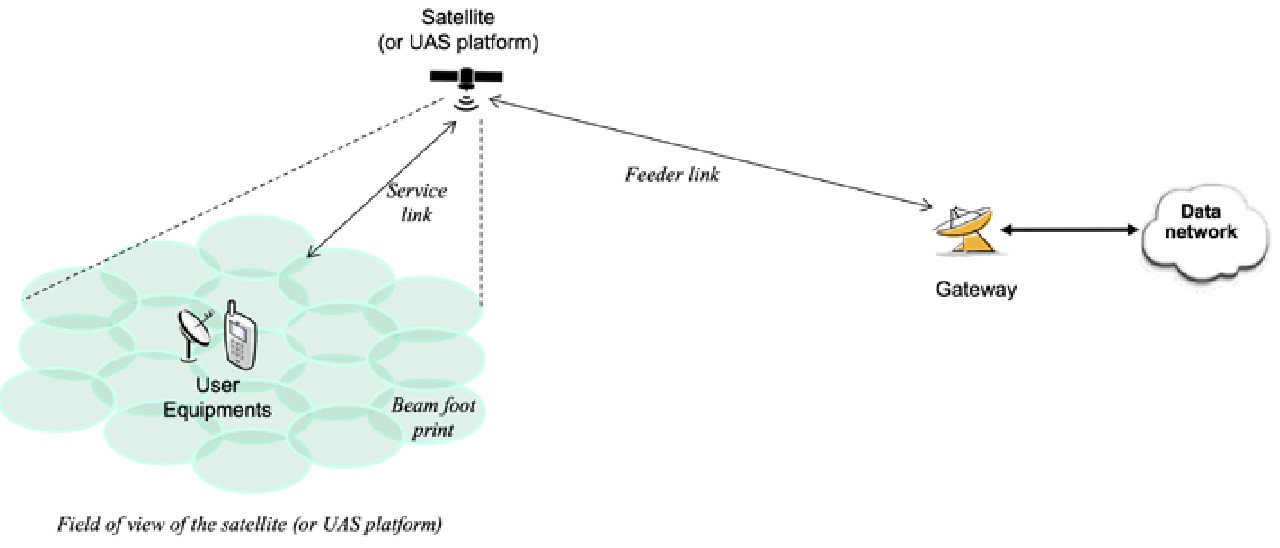
LIDE utilizes a bidirectional K/Ka band RF transponder to enable direct access tests with ground terminals— a gateway and an end-user terminal—compliant with 3GPP’s NTN standard (Release 17). The initial tests are conducted from Italy and later from ESA’s ESTEC in the Netherlands.
In-orbit operations focus on establishing K/Ka band links through the Payload transponder, with the purpose of evaluating KPIs such as C/N, latency, and throughput. This initiative bridges traditional satellite communications with 5G, aiming to realize ubiquitous broadband connectivity and advance European 5G/6G capabilities. This objective aligns closely with broader industry initiatives that aspire to realize the vision of “anything, anytime, anywhere” connectivity.
Challenges
The key challenges of the project include developing and testing novel technical solutions for integrating 5G with satellite communications, ensuring seamless interoperability with ground terminals. This includes establishing a reliable bidirectional data transmission at high data rates in rural and suburban areas, compensating for detrimental effects such as Doppler effect and Carrier Frequency Offset.
Furthermore, the lack of COTS solutions for the ground segment poses a challenge as several components need a custom design and development with inherent associated risks.
Additionally, maintaining precise satellite orientation for optimal signal reception poses a significant challenge, requiring sophisticated attitude control systems.
System Architecture
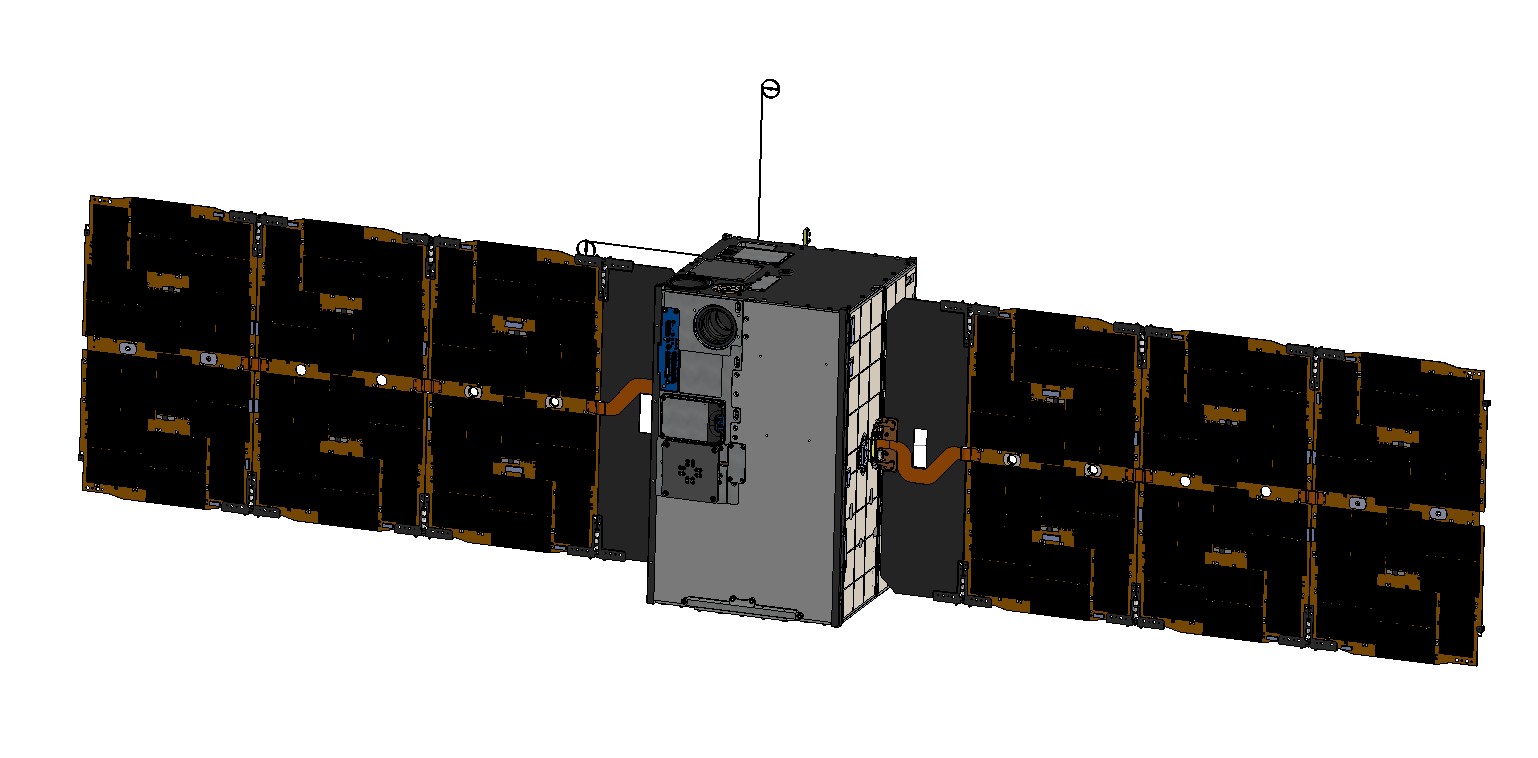
The system architecture includes a space segment consisting of spacecraft and payload subsystems for receiving and transmitting 5G signals. The spacecraft, based on the Tyvak 12U Renegade platform, hosts payload subsystems such as transponders, antennas, and processing units operating in the K/Ka band frequency range. The 12U platform accommodates bus avionics and payload subsystems. It features a robust processing system with redundancy, ADCS software interfacing with star trackers and IMU for attitude determination, reaction wheels, and torque rods for actuation, and UHF/S-band radio options for telemetry and command.
The power generation subsystem utilizes a deployable solar array with MPPT and lithium-ion battery packs, regulated and monitored by the Load Controller Module, to distribute power to subsystems, including the Payload unit.
Xp panel of the spacecraft houses a configuration adopting four antennae: 2x K band TX antennae at 18.8 GHz and 19.2 GHz, and 2x Ka band RX antenna at 29.1 GHz and 29.5 GHz.
The use of the Tyvak 12U deployer allows to accommodate satellites with a form factor up to 226.3 x 226.3 x 400 mm. All the available volume is exploited in the case of the LIDE platform to better accommodate the payload sub-units.
Plan
The project plan is structured into two phases: REMI and LIDE. REMI focused on establishing technical specifications and mission baselines, concluding in March 2023. LIDE commenced with a Kick-Off Meeting in June 2023, achieved the Preliminary Design Review (PDR) milestone by July 2023, and completed the Critical Design Review (CDR) by December 2023. The consortium aims to reach the System Integration Readiness Review by June 2024 and the Flight Readiness Review by Q4 2024. The satellite launch is planned between Q4 2024 and Q1 2025, with a one-year mission duration. The final deliverable is the Final Report, expected at the end of the mission.
Current Status
The project has transitioned from the Feasibility Study to the Demonstration phase. Achievements include establishing technical specifications and mission baselines in REMI, along with the definition of the space and ground segments, and RF payload components. LIDE was followed by successfully achieving the LIDE milestones, including the PDR and CDR. Currently, the project is advancing towards the SIRR in June 2024, and followed by the FRR by Q4 2024. Activities include finalizing system integration, testing, and preparing for launch, scheduled between Q4 2024 and Q1 2025. After launch, the mission is expected to last one year post-commissioning.