PAGE CONTENTS
Objectives
The objective of this study is to implement and demonstrate, through live demonstration over a real GEO satellite, Multi-User Multiple Input Single Output (MU-MISO) digital signal processing techniques, namely precoding, in the Forward (FWD) link of a multi-beam satellite system operating in full frequency reuse (FFR). While standard technologies, as for DVB-S2, operate using an interference avoidance approach through a proper re-use of the spectrum amongst beams, more recent paradigms have been proposed which go in the opposite direction through the management of the interference amongst beams. The objective is clearly to maximize the use of the available spectrum which represents a limited resource of the system.
The study shall increase the maturity of the technology to a TRL 5. To this aim, the demonstrator shall implement all the functionalities of a precoding-based system: synchronization and collection of the estimated Channel State Information (CSI), precoding-specific smart user-scheduling techniques and Modulation and Coding (Modcod) allocation, computationally-efficient calculation of the precoder and application of the resulting precoder to the vectors of symbol streams to be transmitted by the GW. The benchmark for this study is an equivalent system operating in a colour reuse scheme that basically entails an interference avoidance approach.
Challenges
The main challenge of the project is the reduced cost per delivered bit over the satellite by researching and implementing the new technologies. By upgrading the satellite modems and making minor adaptations to satellite payloads, the technology can provide much faster and more accessible broadband service. This improvement can be used to increase the turnover of satellite operators while providing superior quality of service to the users. It should be also noted that the technology allows the satellite operators to dynamically allocate the broadband capacity to the areas where it is needed the most, enabling a higher level of adaptability in terms of space assets. Satellite service coverage can be a subject of economic demand in developing countries and act as emergency services to backup areas with high-risk of natural disasters, where local telecommunication services might be temporally disabled. In the current phase the team is in the process of bringing the technology to TRL 5.
System Architecture
The figure below shows a general block diagram of the demonstrator.
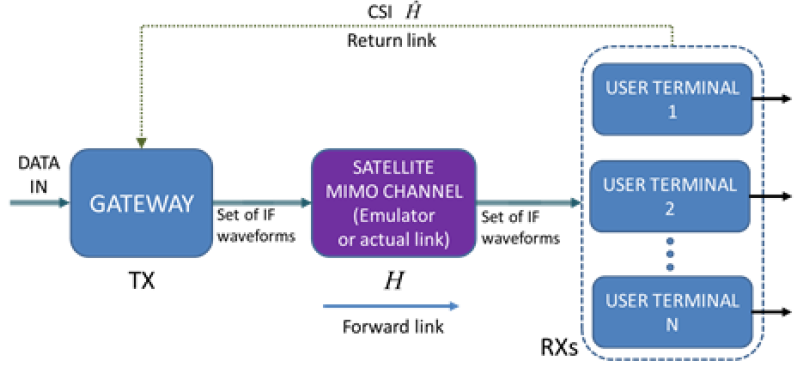
The main functional blocks of the Precoding demonstrator are: a precoding enabled gateway, a satellite MIMO channel emulator and a set of user terminal receivers.
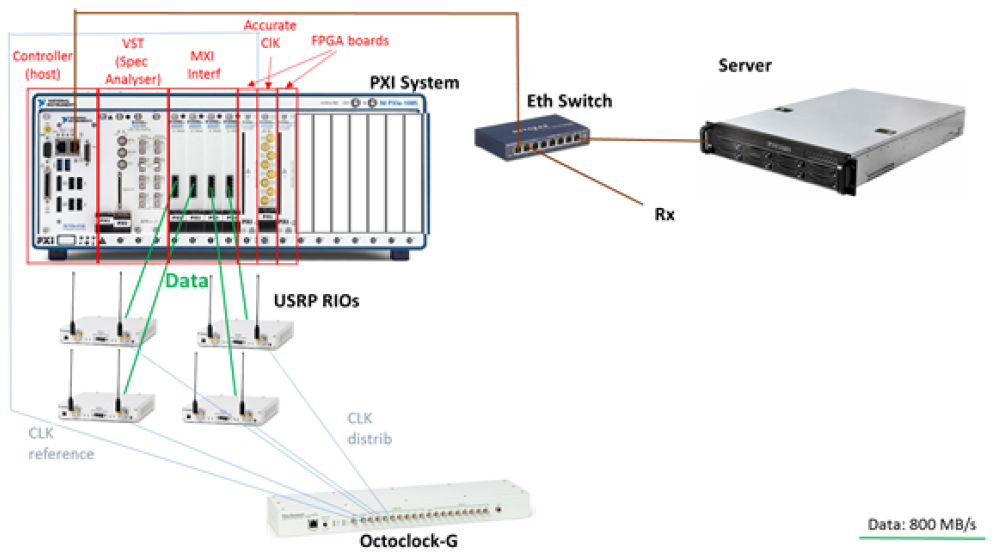
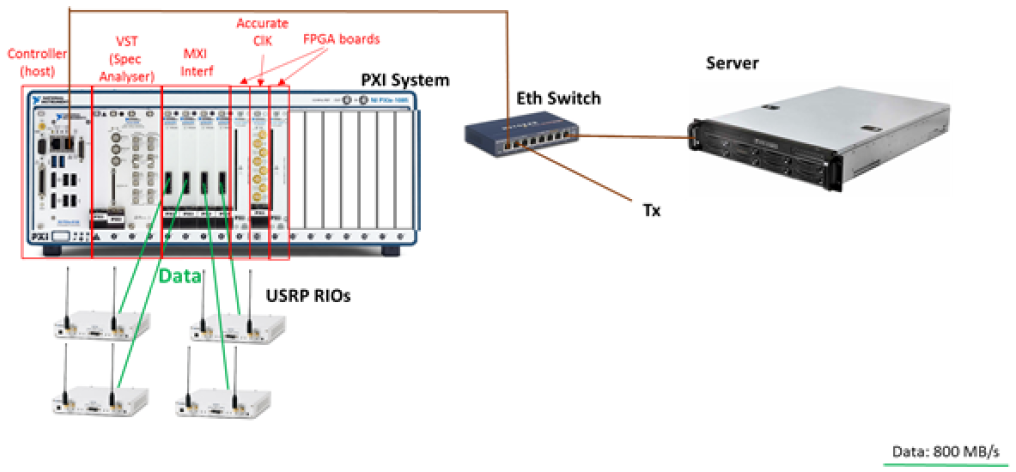
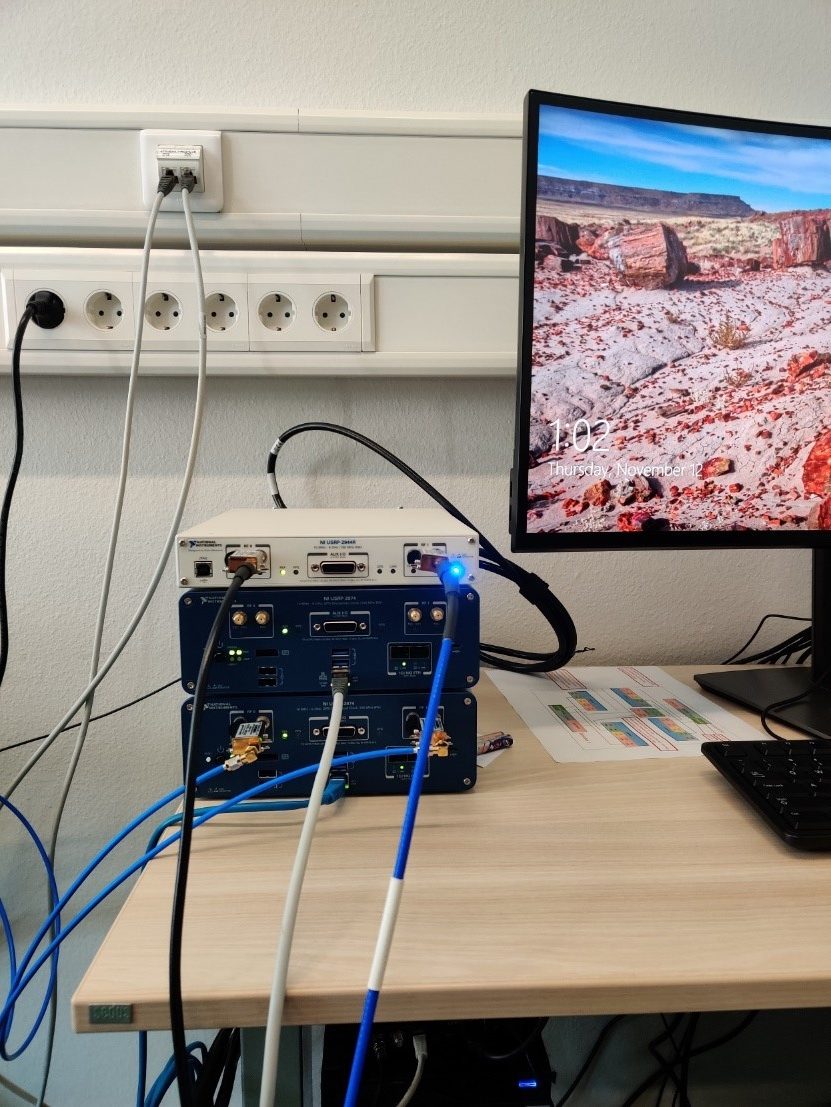
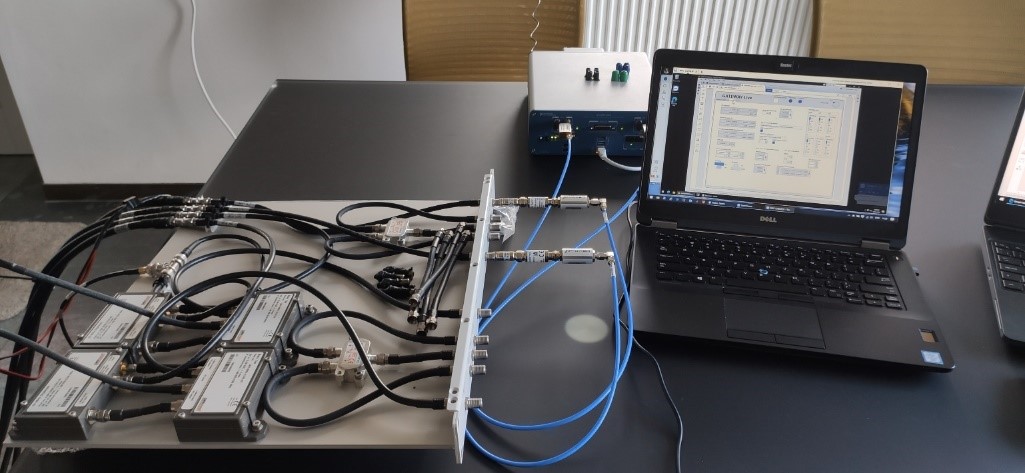
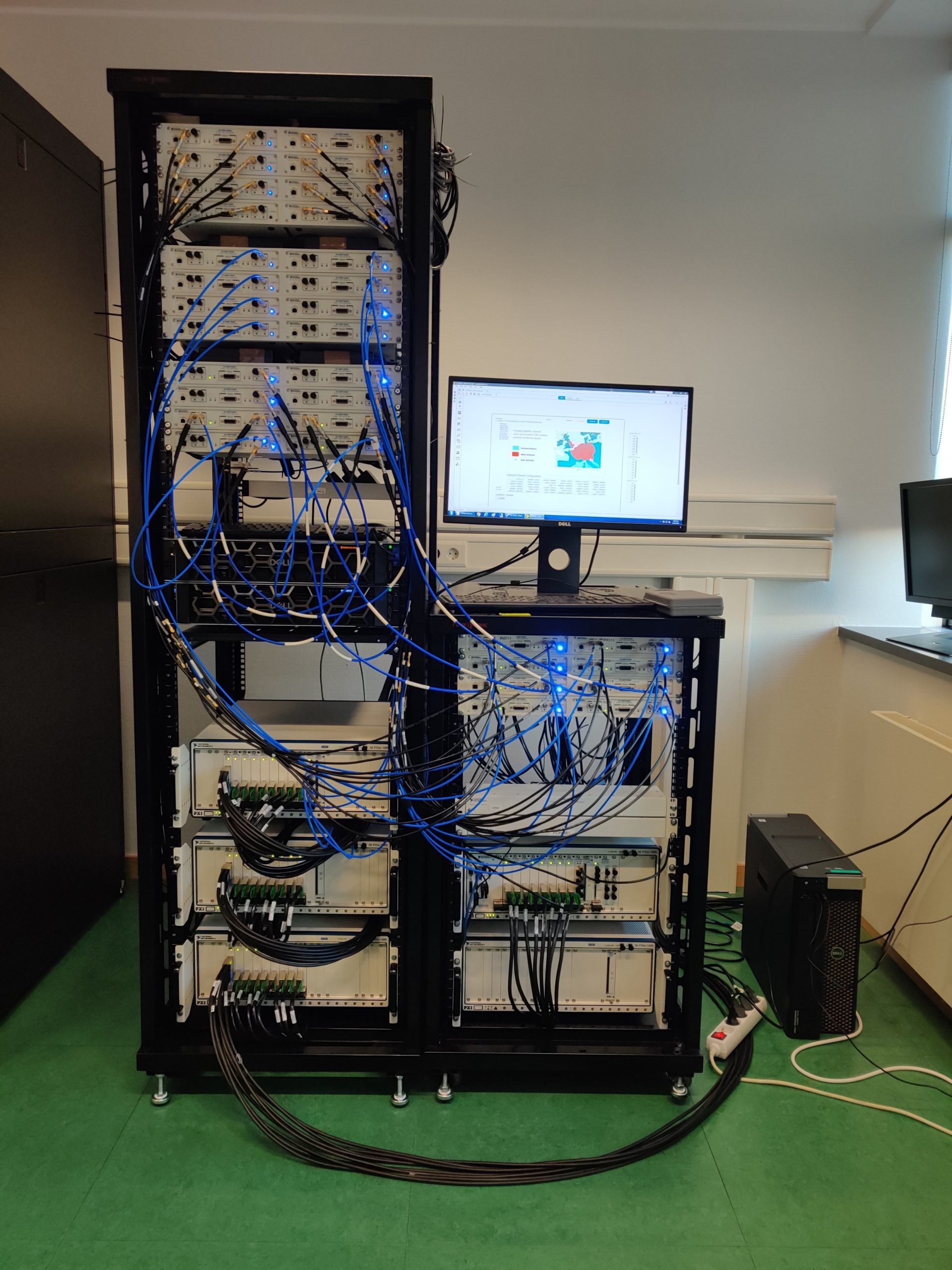
The proposed infrastructure is based on Software Defined radio platform by National Instruments and it is depicted in the following figures for both the GW and the UT.
Plan
To accomplish the project’s objective, 5 main tasks have been identified:
System, scenarios and techniques definition: the main aim of this task is to define use case scenarios.
Detailed design of GW and UT prototypes: the selected algorithms will be designed taking into account the chosen Software Defined Radio based platform.
SDR-based development of GW and UT prototypes: the prototypes of the GW and the UT needed to enable precoding will be implemented.
In-lab testing and validation of prototypes: a validation phase is required to test the functionalities of the novel.
Execution of the demonstrator over Satellites
Current Status
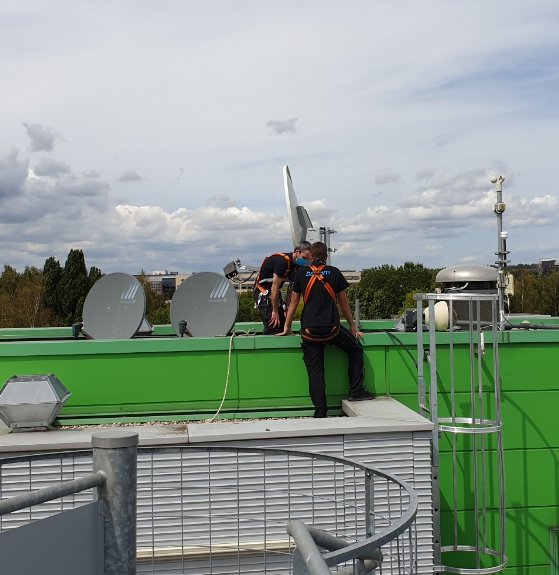
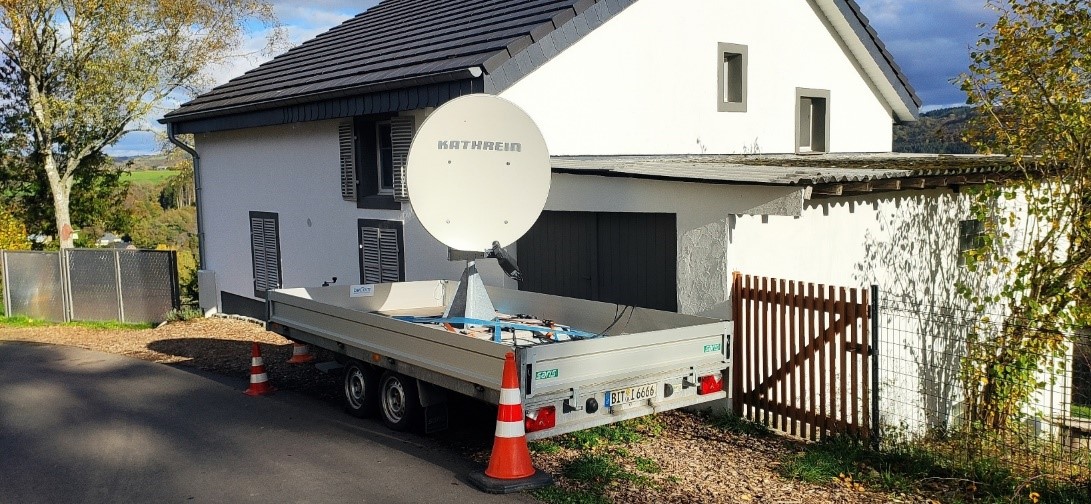
The project has been completed. Hereafter you can find some picture of the equipment used for the Live Demo and the In-Lab demo, and a few links for some videos of both Live Demo and In-Lab Demo.

Project Presentation Video: https://youtu.be/bqdfQ7eLDiU
Link to the Youtube Video of 2*2 Demo: https://www.youtube.com/watch?v=VG2AAOGm33Q
Link to the Youtube Video of the 16*16 Demo: https://www.youtube.com/watch?v=MlFvdZ4Gzr4