PAGE CONTENTS
Objectives
The emergency services, utilities, logistics and construction markets are undergoing transformation in the way they deliver services, by exploiting digital connectivity and applications, with an increasing requirement to be connected everywhere. The overall objective of LightBar is to ensure the availability required to support critical services in the field is met.
This project addresses this gap, initially for the emergency service market by repositioning UK lightbar manufacturing in the global market. This activity might aid the possible future integration of disruptive 5G-satellite technology into products as part of the digital transformation of emergency services after the completion of the project.
The flexible LightBar design provides hybrid connectivity, satellite (initially L-band) and cellular bonding, and resilient positioning whilst being lightweight, small form factor and modular and will continue to be low profile and low cost.
The image below highlights the developed bench prototype and some of the key features the enhanced lightbar design has:
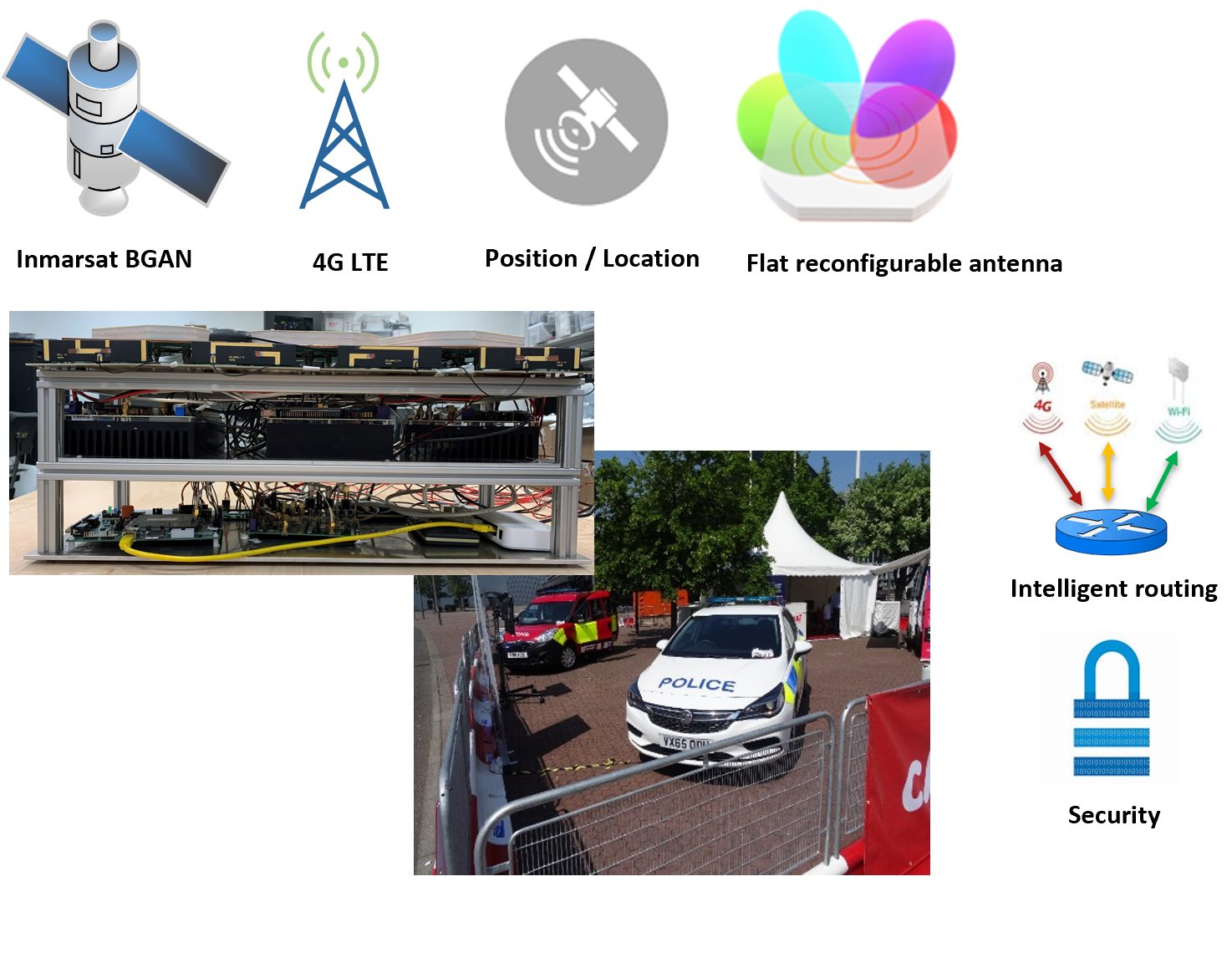
Figure 1 LightBar Bench Prototype and Key Features
Challenges
- Initial L-band solution will have fairly low data rates – high prioritisation may be needed when operating under satcom system initially.
- The Inmarsat BRM does not include native 3G voice capability however VoIP is supported which should provide adequate quality and performance for most applications.
- For full utilisation of the capabilities of the lightbar, it is necessary to integrate with the vehicle mobile data terminals and electronic control systems. This will require additional investment in vehicle information and communication technology
- System will need maximum flexibility to complement ESN system and allow easy interface with a variety of satellite providers
System Architecture
Existing emergency services users are heavily dependent upon (push-to-talk) voice services, though there is a transition to the use of data services in the sector. The enhanced lightbar will support:
- the transition to mobile data networks that operate at higher frequencies than Tetra
- data rich applications including geo-spatial data standards
- integration with higher capability sensing (multiple video cameras) and computing capability (for instance for number-plate and facial recognition applications)
- existing vehicles to be upgraded with enhanced connectivity – all vehicles fitted with a Lightbar with a target to reach better 4G LTE performance than available with hand-carried or internally fitted LTE modems
- critical applications such as voice and geo-spatial application will refresh over satellite, even when out of terrestrial coverage.
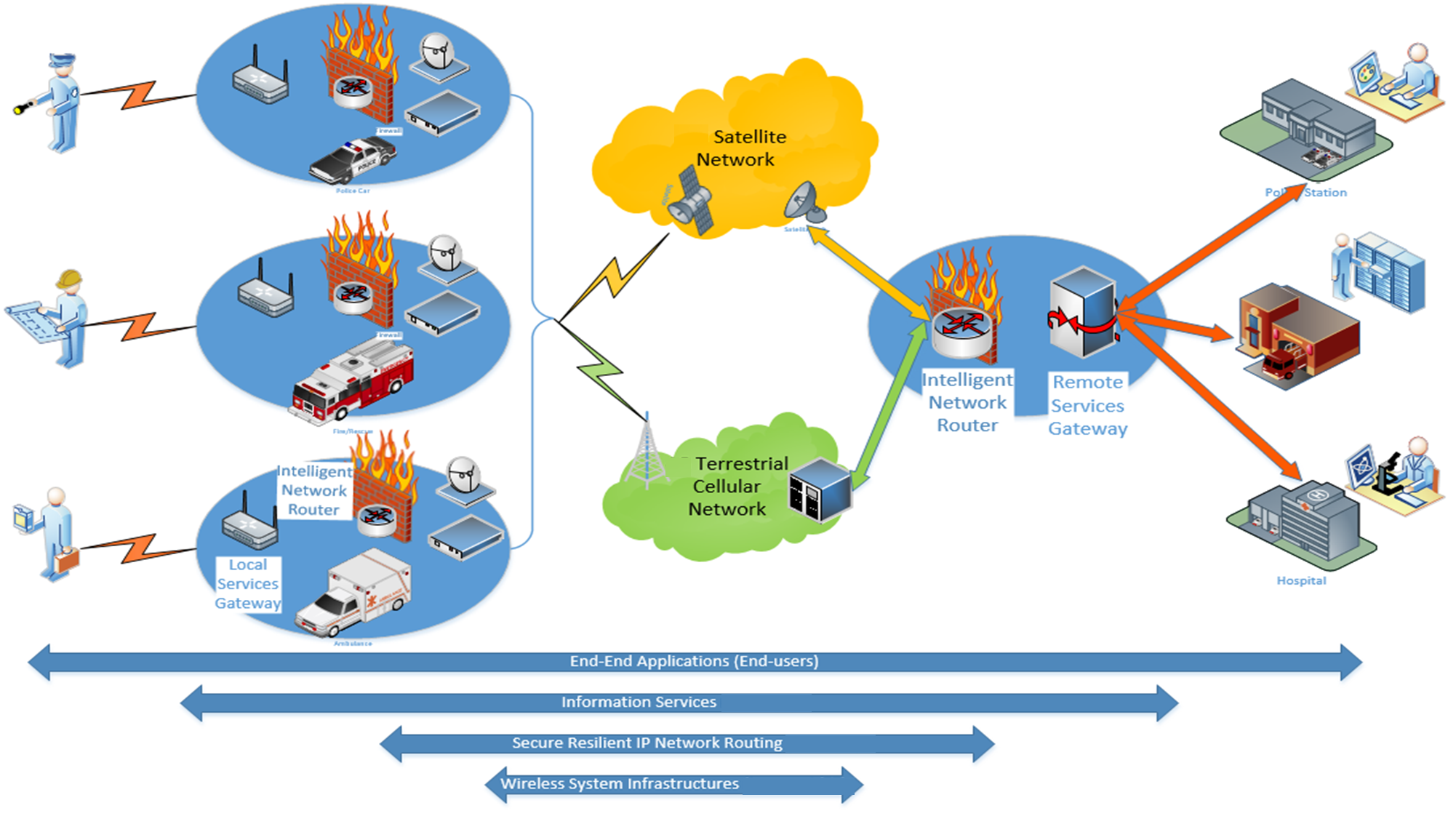
There is a variety of different applications operating on a client device (in-vehicle system) with respect to access a server (backend-office) and demand real-time or cashed data exchange securely and seamlessly. The integrated hybrid connectivity Lightbar platform provides an alternative solution to existing in-vehicle gateways, offering augmented connectivity and optimised IP based traffic routing as outlined by the graphic below:
Plan
The LightBar Project has completed the Technology Phase.
The Technology Phase is based on the following milestones:
- Preliminary Design Review (PDR) – end 2018/early 2019
- Critical Design Review (CDR) – mid 2019
- Final Design Review (FDR) – spring 2020
- Final Review (FR) – July 2020
Current Status
The Lightbar activity has completed the Technology Phase.
Companies