PAGE CONTENTS
Objectives
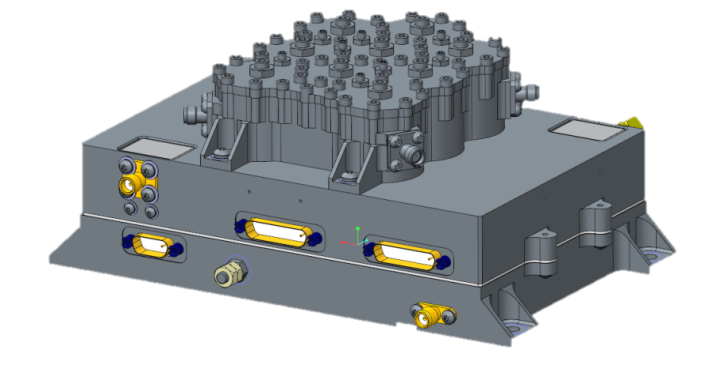
SatNetCode will provide reliable end-to-end visual-data communications for mission-critical operations by integration of adaptive network re-encoding and can, in target multi-hop networks, increase relevant information throughput while reducing bandwidth usage to less than half.
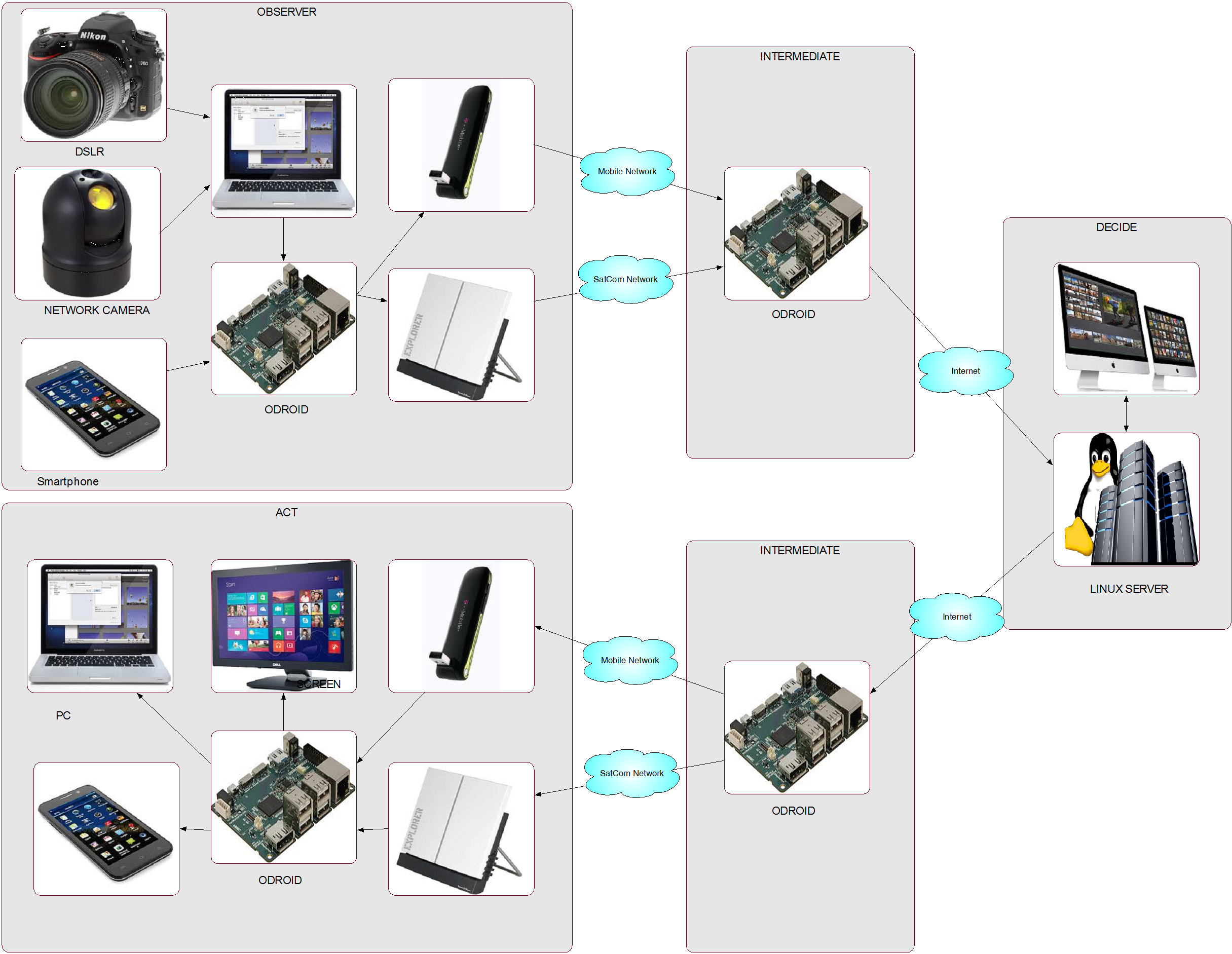
SatNetCode non-exclusively targets users in emergency, disaster, safety and security organizations, that need visual situational awareness. For these organizations, operational scenarios (with observers, decision makers and actions teams) consist of several physical nodes at different locations communicating using different networks.
By advancing beyond the traditional approaches of routing and forward erasure correction codes, SatNetCode exploits the opportunities to use novel in-network coding schemes in order to increase the overall throughput in these scenarios to provide better quality of experience for critical operations.
Challenges
In this project, two key challenges were identified to deliver reliable end- to-end visual-data communications with network coding:
First, to protect data from packet erasures in an end-to-end solution where mobile satellite links are involved as a key network component, and linked with other networks. These networks may under difficult conditions be unstable and unpredictable, resulting into network impairments including packet erasures and varying bandwidth. This will affect the quality of the visual data, and subsequently, the mission- critical operations.
Second, the need of innovation in design methodology for virtualization of network coding functions that can be used irrespective of the underlying physical network and for any offered services. Overall, it increases the flexibility, scalability and rapid deployment while creating significant cost saving.
System Architecture
The basic system architecture is simple. There are:
- Sources (like cameras) providing video
- Computers for running SatNetCode and application software
- Communications equipment, like sitcom terminals
- Network emulators
- A first receiver node that passes content onwards and works as a re-encoding node
- A final viewing node.
The high level architecture of the project is displayed below with the mapping of the physical nodes and logical network coding nodes.
The focus in this project is primariliy on the design and implementation of network coding functional blocks at these network coding nodes.
Plan
The duration of the project is 24 months.
The basic milestone planning is as follows:
- MS1 Baseline Design Review (BDR)
- MS2 Mid Term Review (MTR)
- MS3 Final Review (FR)
Current Status
The project was completed on November 2018.
SatNetCode targets mission-critical video streaming from UAVs and vehicles, specifically at low rates via satcom, and addresses the challenge of accumulated packet loss in a chain of potentially unreliable mobile satellite and cellular networks.
A demonstration test bench is built, and results are published. A novel systematic capacity-achieving network coding scheme using less capacity than random codes is developed and tested. The re-encoding nodes developed prevent errors from propagating, and SNC video is not affected by multiple network hops.
The next development targets a software product for Cobham AVIATOR UAV 200, and addresses use like UAV assessment offshore with video to HQ and land and relayed to ships out at sea. Plans include technology development with UAV flights together with Robot Aviation.