
PAGE CONTENTS
Objectives
The objective of the study was to develop a software tool implementing a set of channel propagation models that combine deterministic and statistical approaches including physical principles (diffraction, specular or diffuse reflection, transmission) together with stochastic parameters. The interest of these approaches is to be able to extend the validity of the models to different scenarios and environments. The models and associated software tool shall cover land-mobile satellite, aeronautical and maritime environments. They are intended to be used for system design and/or air-interface performance optimisation for frequencies below 10 GHz. Therefore they must provide both time-series representative of the channel and statistical distributions of the channel characteristics than can be used for systems design.
Challenges
Various methods and models have been proposed in the past to describe the fading effects in the LMS propagation channel at large and small scales. They can be empirical, statistical or analytical/physical. Physical or site-specific models can provide precise and accurate results but are unsuited to our problematic since their computation time would be far too important in a cellular environment. On the other hand, empirical models, based on measurements campaign, are a fast way to provide accurate statistical results. However their results are strongly bound to the environments of the measurements and the frequency.
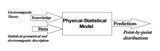
Therefore a compromise between these two approaches, known as physical/statistical model, has been proposed. The philosophy of this approach is to apply more or less simplified physical propagation models to urban or suburban scenarios drawn from statistical distributions of the characteristics of a given environment such as building height distribution or width of the streets, etc… This kind of models combines the statistical accuracy, ease-of-use and low computational requirements of empirical models, with the physical insights of deterministic models and the possibility to estimate the model for a lot wider range of elevation and azimuth situations.
Plan
The logic of the study was based :
- first on a review of existing mobile (satellite and terrestrial) propagation models available in literature that uses combined physical-statistical approaches, and a review of the datasets available for parameterising and validating the models
- second the design of the global software simulator which includes different models or approaches
- third the adaptation of existing models and the development of new models which were included in the simulator
- fourth the integration of all these models into the simulator, and its complete implementation and validation
- fifth the use of the simulator to perform several case studies, and the reporting of the results

Current Status
COMPLETED. The project has ended on October 15th, 2013.